How Giving Blood Changed a Donor’s Life

By Katherine Liu, Red Cross Volunteer
When Katherine Boyd stepped into a blood donation over three years ago, she never
expected the experience to change her life.
In 2018, Katherine was diagnosed with hemochromatosis, a genetic condition that causes
the body to absorb excess iron and can damage organs over time. The treatment for
hemochromatosis involves phlebotomy, or removing blood from the body to physically
rid it of excess iron. Ever since her diagnosis, Katherine has been giving blood at least twice
a year as a part of her treatment.
“There are many people who have undiagnosed hemochromatosis who are donating
blood,” Katherine says, “And that leads them to having a healthier life and they don’t even
realize that it’s helping them.”
She recalls that there was one such case in her own family. One of her relatives was diagnosed with hemochromatosis after being a regular blood donor for many years, and doctors found that his regular donations were improving his health before he was even aware that he had hemochromatosis.
“That story has always kind of stuck in my mind,” Katherine says. She enjoys the fact that she can donate blood to treat her own condition while also helping others in need of blood.
Several years after Katherine’s hemochromatosis diagnosis, something unexpected
happened during a routine blood donation. As the phlebotomist (professional of drawing
blood) was taking Katherine’s pulse, she found an abnormal heart rhythm. She advised
Katherine to visit a doctor, who diagnosed her with premature ventricular contractions, or
extra heartbeats that originate in the ventricles and disrupt the heart’s normal rhythm.
“It can be totally benign or cause problems over time,” she explains, “but I don’t think I
would have known about it if I hadn’t been donating blood.”
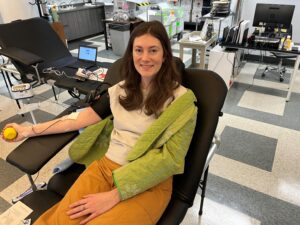
Katherine says that of the places where she’s donated blood, the Red Cross’s process has been the most convenient. “Its a lot easier to make an appointment,” she says about being able to donate on the weekends without having to take a day off of work to relax after getting her blood drawn.
To anyone on the fence about donating blood, Katherine reassures that if you can sit through a tattoo or get your ears pierced, you can handle giving blood. “And there’s always this added bonus of, in addition to helping someone else, helping your own health in ways that you don’t even realize,” she emphasizes. “It’s always a win for somebody, but it could be a win for you as well.”
Ready to make a difference? Schedule your own blood donation at RedCrossBlood.org.
One appointment could help save a life—maybe even your own.