7 Ways to Celebrate America’s 250th Birthday—Safely

Written by Katherine Liu, Red Cross Youth Volunteer
It’s not difficult to tell when a Fourth of July celebration is going on, especially if your
neighbors are the type to set off fireworks at 9 am, a behaviour that sends all the dogs
within a 5 mile radius into hiding under the bed. But there are ways to celebrate our country’s 250th birthday safely!
Whether or not you are planning on using fireworks, it is important to recognize the
safety guidelines for fireworks in order to prevent accidents. According to the United
States Consumer Product Safety Commission (CPSC), there were over 13,000 firework
injuries reported in 2025, with 38% of injuries being burns. Knowing the information
provided below could help you avoid these injuries.
Here is a list of important firework guidelines compiled from the CPSC and
National Safety Council:
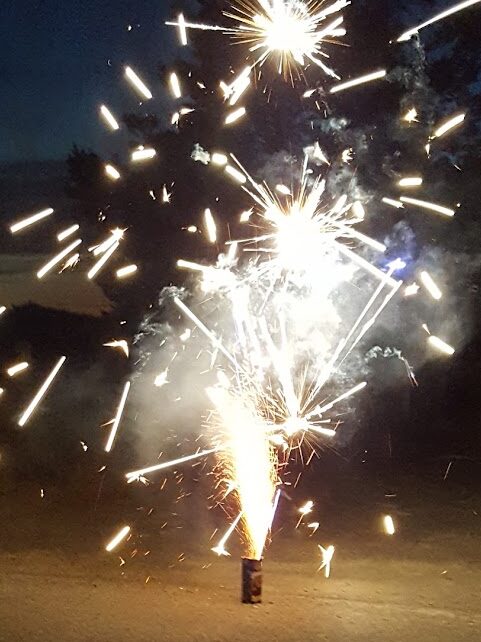
- Never allow children to handle fireworks and sparklers. Older children
should only handle fireworks under strict adult supervision: If your fireworks
operator still needs help tying their shoes, they’re likely not qualified for the job
(yet). - Check your state and local laws before purchasing or setting off fireworks:
Before anything is launched into the sky, check that it is actually legal for it to
leave the ground… One jurisdiction may allow aerial fireworks, while another
permits only sparklers and novelty items, or prohibits consumer fireworks
altogether. - Make sure to follow the directions provided by the firework manufacturer.
Light fireworks one at a time, and move away quickly: From the point of view
of professional fireworks observers (dogs, kids, the neighbors), fireworks are
much better viewed from far away than close up—and also much less of a fire
hazard. - Do not attempt to touch or reuse old fireworks: both used and new
fireworks should be soaked thoroughly in a bucket of water for a few hours
before they are discarded. Trust us, the fireworks that refused to go off are not
asking for a second chance. - Never use fireworks when under the influence of drugs and alcohol: The
fireworks provide the spark with no need for the contributions of your decision
making. Ensure that you are able to make informed choices before lighting
fireworks! - All those in proximity of fireworks should wear appropriate protective
clothing. Never light fireworks indoors, in a container, or in close proximity
with people, houses, and flammable material: Your goal should be a great
fireworks show, and not a whole unexpected home renovation (or in this case,
un-rennovation). And before uncle Joe asks: No, flip flops are not protective
footwear. He would be better off with flame resistant fabrics like cotton and
denim, covered legs, and closed-toe shoes. - Keep a bucket of water and/or a hose on hand in case of accidents: Yes, a
bucket of water could very well be the most important guest at your Fourth of July
party. Great for extinguishing spot fires or preparing fireworks to be discarded
(see number 4).
If you still want to stay in the spirit of Fourth of July without fireworks, the
National Fire Protection Association has some ideas for you:
- Glow sticks are safe alternatives to sparklers that can be used by all ages.
- Noise makers like cowbells and patriotic kazoos are often found at party stores.
There are also wonderful homemade options like noise tubes and paper plate
tambourines that make great DIY crafts for the kids! - Silly string (idea: in the colors red, white and blue) are fun for all ages that create
the burst of statement without the fire risk.

Finally, consider attending a professional fireworks show in your community. No matter how you choose to celebrate the Fourth of July, remember to stay safe and educate those around you on firework guidelines. For more safety tips for the summer,
check here! Your neighbors (and local firefighters) will thank you.