How a Simple Meal Brings Comfort After Disaster
By Rebecca Marshall
When you think about the American Red Cross in times of disaster, sheltering is likely your first thought. But that’s only the beginning. Once a shelter is established, a feeding plan is put into place with meals being offered three times a day. This happens with the help of established partners in the community and local restaurants.
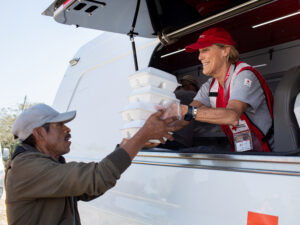
It’s not just inside the shelters either. Red Cross volunteers will also drive Emergency Response Vehicles (ERVs) into hard hit neighborhoods to deliver meals there.
This feeding program has provided relief to disaster victims for over 140 years with the first disaster relief effort established in 1881 and it’s been happening ever since, translating to millions of meals being served. During Hurricane Katrina alone, the Red Cross served a record breaking 27-million meals.
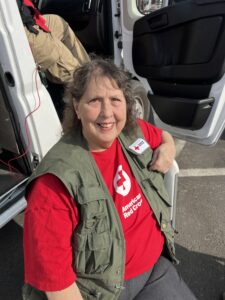
Beyond those numbers, are real people who received hope in the form of a meal. Julia Bishop knows all about that. She’s a volunteer who’s deployed over 80 times (including Hurricane Katrina), mostly in feeding or managing a feeding team.
Here’s what she has to say about her experience:
“We feed evacuees in the shelters, but we also drive through affected areas and do mobile feeding. When they can go home or to temporary housing, we also try to support them by providing food boxes because they have lost all their food.
It is so rewarding to see the people coming out to the curbs looking forward to seeing us, they let us know where elderly or disabled clients are living so we can go up to the door with their meals. As they come up to our serving window (in the ERV), we gather more information from them about other needs they may have, so we can fully support them. They are always so grateful. That is our reward for being there to help them in their time of need.
I had a situation in Florida after a tornado; a young boy was traumatized and quit talking. One person on my mobile feeding team was a first-grade teacher that deployed to help. She so gently engaged with the young man that he trusted her and said “thank-you”. It brought the mother to tears that he began speaking again. The young boy brought the volunteers flowers the next day. We try to bring comfort and hope with the meals we serve to our clients.
As a volunteer the biggest paycheck we receive is that smile or hug from a person that we have helped. That is what makes us keep coming back.”
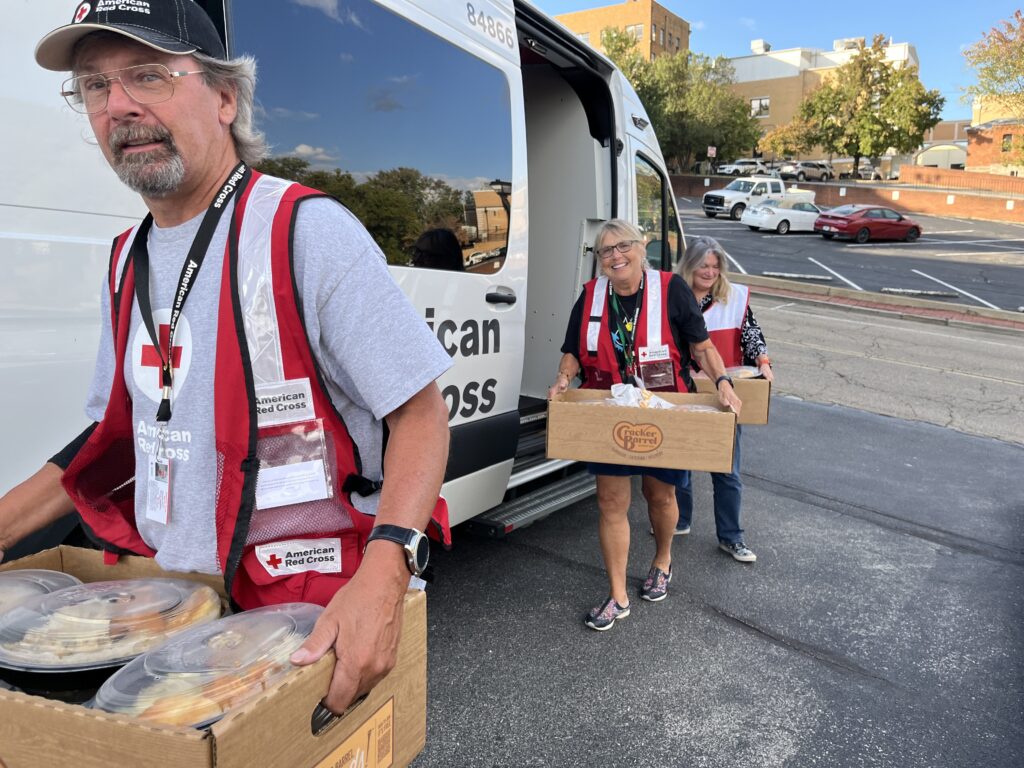
When shelter and food are in place, people affected by disaster can begin to look beyond survival and toward recovery. Every meal served helps restore strength, dignity, and hope—one moment at a time. That belief is at the heart of the Red Cross Meals with Meaning campaign, which helps ensure families affected by disaster continue to receive critical meals, snacks, and water when they need them most. Together, we can help carry this lifesaving work forward for the next 140 years.